
Understanding Moisture Control in Bathrooms and Wet Areas
Introduction
Moisture is one of the leading causes of building damage worldwide. If water penetrates walls, floors, or ceilings, it can lead to mold growth, structural deterioration, reduced insulation performance, and expensive repairs.
For this reason, every modern building should be designed to control moisture effectively and protect the building structure throughout its service life.
Building moisture protection includes all measures that prevent unwanted water or excessive humidity from damaging construction materials.
Why Moisture Protection Is Important
Proper moisture protection helps to:
- Prevent mold growth
- Protect structural components
- Increase the lifespan of building materials
- Improve indoor air quality
- Reduce maintenance costs
- Maintain thermal insulation performance
A well-designed waterproofing system contributes to both building durability and occupant comfort.
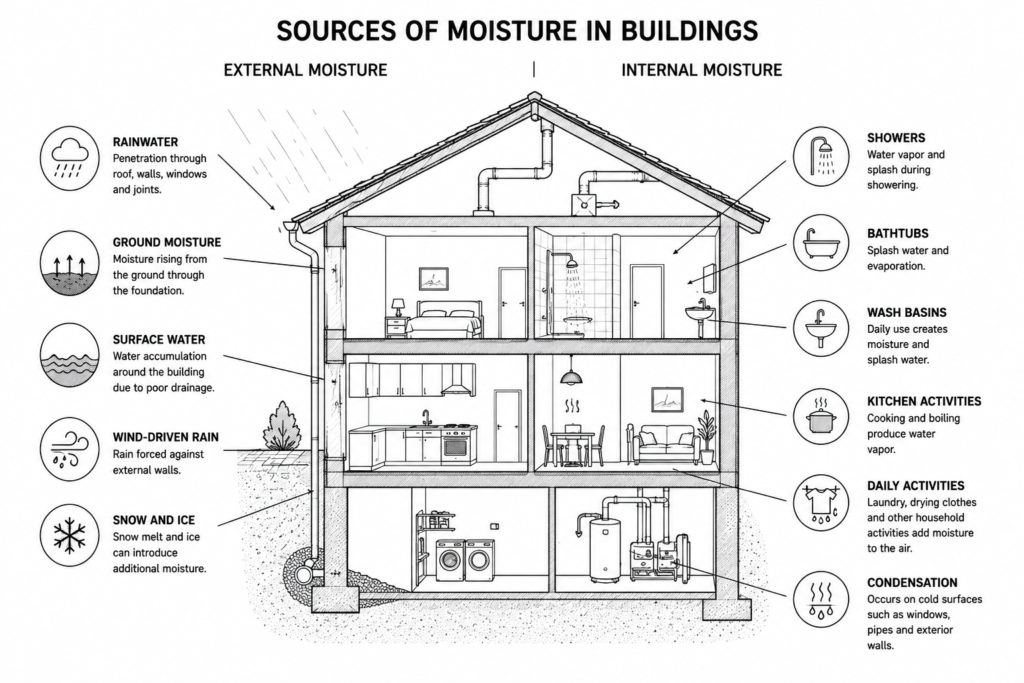
Understanding Moisture Sources
Water can affect a building in different ways.
Generally, moisture originates from two primary sources:
External Moisture
Moisture entering from outside the building may include:
- Rainwater
- Ground moisture
- Snow and ice
- Surface water
- Wind-driven rain
These sources require external waterproofing systems to prevent water penetration.
Internal Moisture
Moisture generated inside the building is commonly caused by:
- Showers
- Bathtubs
- Wash basins
- Kitchen sinks
- Water splashes
- Condensation
- Daily household activities
Bathrooms, kitchens and utility rooms experience the highest levels of internal moisture.
Moisture in Bathrooms
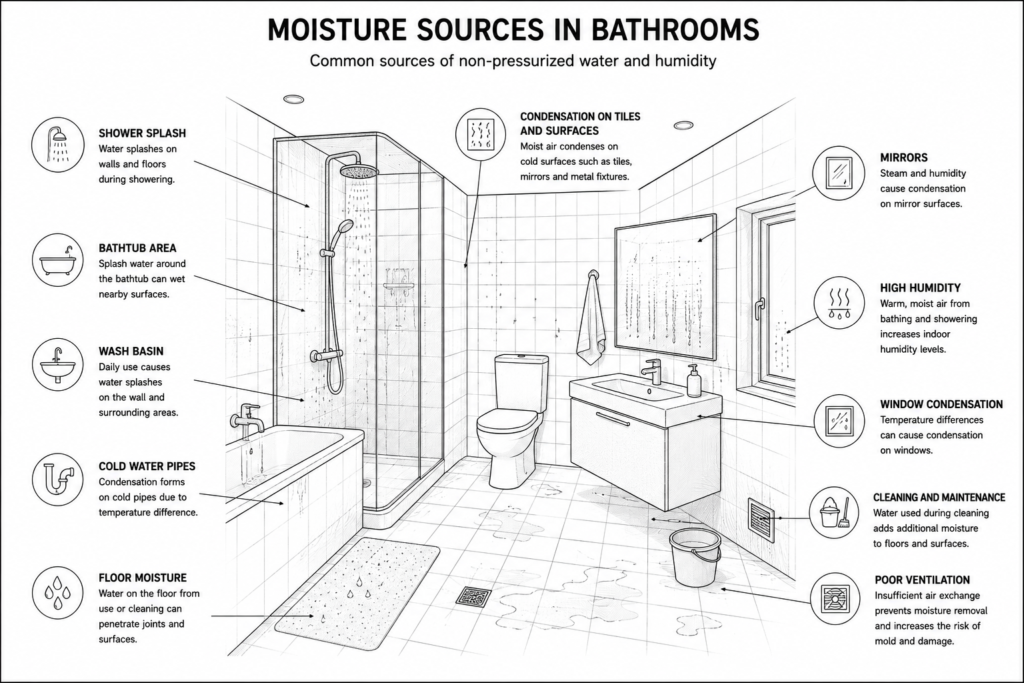
Bathrooms are among the most demanding environments regarding moisture control.
Water reaches surfaces in several forms:
- Splash water from showers and bathtubs
- Water around wash basins
- Condensation on cold water pipes
- Condensation on mirrors and tiles
- High indoor humidity
Unlike groundwater or hydrostatic pressure, this type of moisture is generally considered non-pressurized water.
Although it does not exert structural pressure, repeated exposure can gradually damage finishes and building materials if waterproofing is inadequate.
The Role of Waterproofing
Waterproofing systems create a protective barrier that prevents moisture from penetrating walls and floors.
Typical waterproofing applications include:
- Shower areas
- Bathtub surrounds
- Bathroom floors
- Kitchen splash zones
- Utility rooms
- Laundry rooms
Modern waterproofing membranes are commonly installed beneath ceramic tiles or other floor and wall finishes.
Condensation and Water Vapor
Not all moisture appears as visible water.
Warm indoor air naturally contains water vapor.
When humid air contacts a cold surface, condensation forms.
Common examples include:
- Cold water pipes
- Metal fixtures
- Mirrors
- Exterior walls
- Windows
Without adequate ventilation, condensation can accumulate and promote mold growth.
Vapor Diffusion
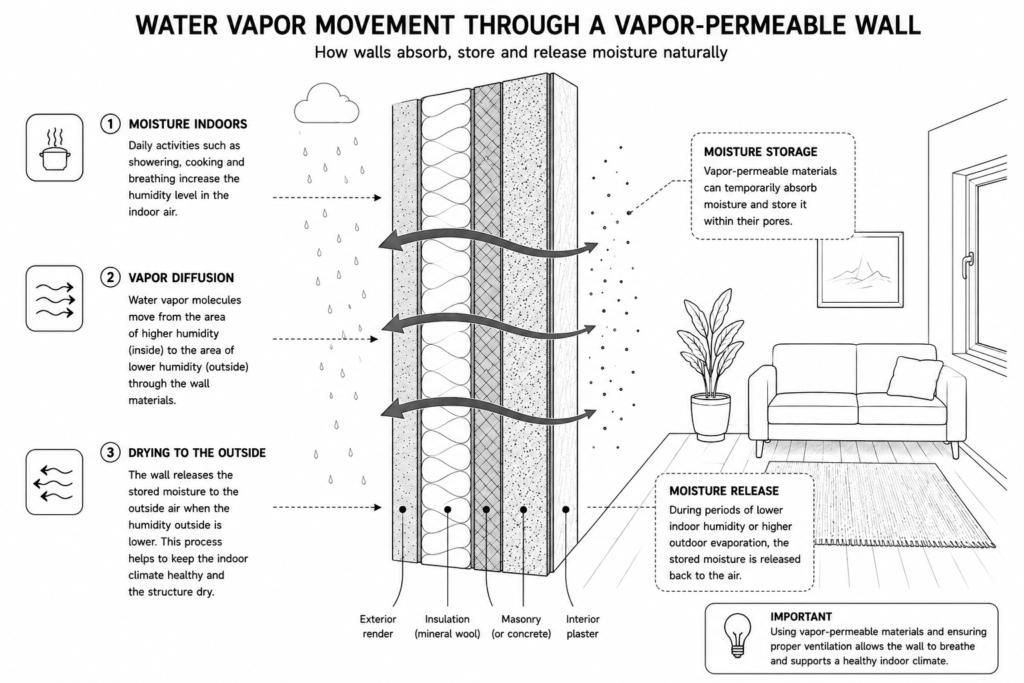
Building materials continuously exchange moisture with the surrounding air.
Walls and ceilings designed with vapor-permeable materials can temporarily absorb excess moisture and release it again as indoor humidity decreases.
This natural moisture regulation contributes to a healthier indoor climate.
However, excessive use of impermeable finishes may reduce this drying capability.
Why Ventilation Matters
Ventilation is one of the simplest and most effective methods of controlling indoor humidity.
Good ventilation helps to:
- Remove excess moisture
- Reduce condensation
- Improve indoor air quality
- Prevent mold growth
- Accelerate drying after showering
Mechanical ventilation systems are especially beneficial in bathrooms without windows.
Common Waterproofing Mistakes
Many moisture problems are caused by poor workmanship rather than defective materials.
Typical mistakes include:
❌ Missing waterproof membrane behind tiles
❌ Poorly sealed pipe penetrations
❌ Inadequate sealing around showers and bathtubs
❌ Damaged silicone joints
❌ Lack of ventilation
❌ Incorrect installation of floor drains
Preventing these issues during construction is far less expensive than repairing water damage later.
Practical Tips
Professional installers should always:
✔ Waterproof wet areas before tiling.
✔ Seal all wall and floor penetrations.
✔ Protect corners with waterproof sealing tape.
✔ Use waterproofing systems recommended by the manufacturer.
✔ Ensure sufficient bathroom ventilation.
✔ Inspect silicone joints regularly.
Frequently Asked Questions
Is waterproofing required behind bathroom tiles?
Tiles alone are generally not waterproof. In wet areas, a dedicated waterproofing system is usually required beneath the tile finish, depending on local building regulations.
What causes condensation on cold water pipes?
Condensation occurs when warm, humid indoor air contacts a pipe surface that is colder than the surrounding air.
Pipe insulation is often used to reduce condensation.
Can poor ventilation cause mold?
Yes.
High indoor humidity combined with insufficient ventilation creates ideal conditions for mold growth.
International Standards
Waterproofing requirements vary between countries.
| Country / Region | Common Standards and Regulations |
|---|---|
| 🇩🇪 Germany | DIN 18534 |
| 🇪🇺 Europe | EN-based national regulations |
| 🇬🇧 United Kingdom | BS 5385, NHBC Standards |
| 🇺🇸 United States | International Residential Code (IRC), ANSI, TCNA Handbook |
| 🇨🇦 Canada | National Building Code of Canada |
| 🇦🇺 Australia | AS 3740 – Waterproofing of Domestic Wet Areas |
| 🇳🇿 New Zealand | NZBC E3 Internal Moisture |
Important: Waterproofing requirements differ between countries. Always follow the regulations and standards applicable to your project location.
Key Takeaways
- Moisture protection is essential for long-term building durability.
- Bathrooms and kitchens are the areas most exposed to internal moisture.
- Splash water and condensation require effective waterproofing solutions.
- Vapor-permeable construction can help regulate indoor humidity.
- Proper ventilation significantly reduces condensation and mold risk.
- Correct waterproofing installation protects both the building and its occupants.
